

3 insights from Toronto’s AI-powered approach to donor lungs

What happens when a lung transplant surgeon and an artificial intelligence researcher start working on the same problem?
In Toronto, the answer could mean more donor lungs available for transplantation.
At University Health Network (UHN), thoracic surgeon-scientist Dr. Shaf Keshavjee and Chief AI Scientist Dr. Bo Wang are part of a team using AI-powered models to assess donor lungs.
Their work offers an intriguing example for STEM leaders: meaningful advances can happen when people from different fields connect, share expertise and tackle a challenge together.
Their collaboration offers three insights worth a closer look.
1. Bring different disciplines to the same table
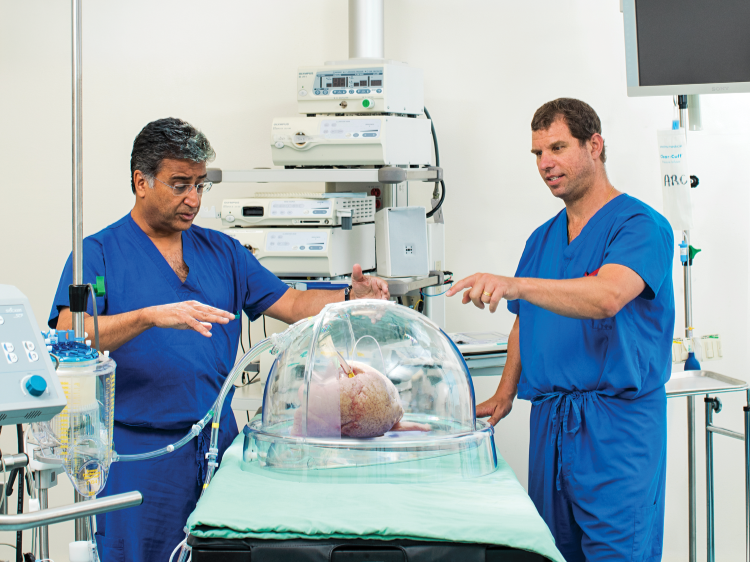
Shaf Keshavjee (left) and Marcelo Cypel with the Ex Vivo Lung Perfusion (EVLP) system they developed at Toronto General Hospital.
Dr. Keshavjee and Dr. Wang came to the project from very different directions—and were brought together through mutual friends in 2023.
In 2008, Dr. Keshavjee had helped develop the Ex Vivo Lung Perfusion (EVLP) system, which keeps donated lungs functioning outside the body so they can be assessed and treated. In the process, that system generated a rich stream of biological data.
When they met, Dr. Wang was looking for large datasets that could train AI models with practical applications for physicians and patients.
Dr. Keshavjee realized he had exactly what Dr. Wang needed.
Together, their teams created “digital twins” of donor lungs and used them to run a virtual clinical trial.predicting how they may function and whether damaged lungs may respond to treatment.
The study was published this year in Nature Biotechnology, one of the world’s leading biotechnology journals.
“With the help of these AI models, we can increase the utilization rate from as low as 20 per cent to 50 or 60 per cent,” Dr. Wang explains. “You can imagine how many more donor lungs could become available for transplantation, and how many additional patients could benefit.”
2. Create the conditions for connection
This collaboration also says something about place. Toronto’s downtown core brings hospitals, universities, research institutes and innovation organizations into close proximity.
Dr. Keshavjee and Dr. Wang work only about a five-minute walk apart.
That physical closeness makes it easier for people working across disciplines to meet, exchange ideas and build relationships—in laboratories and at events.
“We can bring AI scientists, clinicians and data engineers all together around real clinical problems,” says Dr. Wang. “That, to me, as a researcher in AI for health, really makes Toronto an ideal place to test AI strategies safely and responsibly.”
3. Think of meetings as part of the innovation ecosystem
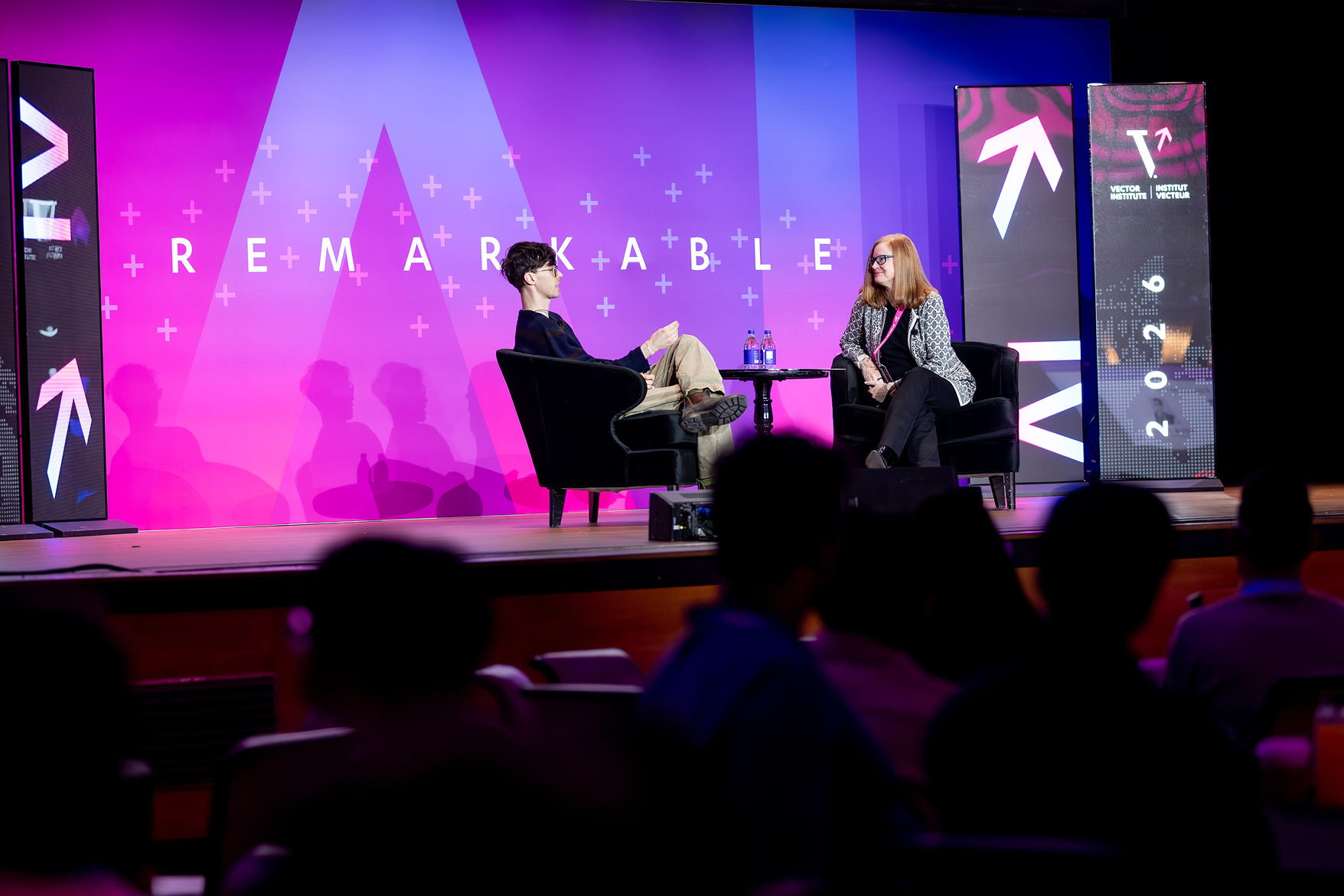
Healthcare AI was a major theme at the Vector Institute's Remarkable conference in Toronto in February, which brought together more than 1,500 researchers and industry leaders from 39 countries.
For STEM associations, there’s a bigger takeaway: convening people can be more than an exchange of knowledge. It can create the conditions for new collaborations.
Toronto’s Vector Institute brought more than 1,500 researchers and industry leaders from 39 countries together for its Remarkable conference, where healthcare AI was a major theme.
For association leaders choosing where to gather their communities, that surrounding ecosystem matters.
A meeting in Toronto can connect delegates with the organizations, researchers, clinicians and scientists working on real-world challenges—allowing fresh perspectives to emerge naturally.
Learn more about hosting your next meeting in Canada at businesseventscanada.ca.